
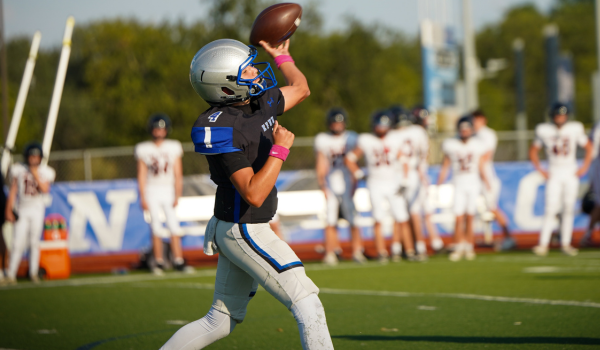
Juvenal “Juju” Torres — Quarterback, Class of 2028 — Georgetown High School, Georgetown, Texas
This year, in between his own workouts, Juju Torres spent his time coaching nine- and ten-year-olds.
It was neighborhood flag football, the kind of program that runs on volunteers and folding chairs. He took it seriously. “It helped me strengthen my leadership skills,” he said, “and gave me the chance to share my love for the game and help others fall in love with it too.”
That last phrase is worth holding onto, because he knows exactly what it feels like from the other side. Torres can name the moment football got him. He was watching a Dallas Cowboys game with his family, and Tony Romo threw one to Dez Bryant. “It was then that I instantly found the love for the game,” he said. Ten years later he is the one standing on a youth field, hoping some kid out there is having his version of that afternoon.
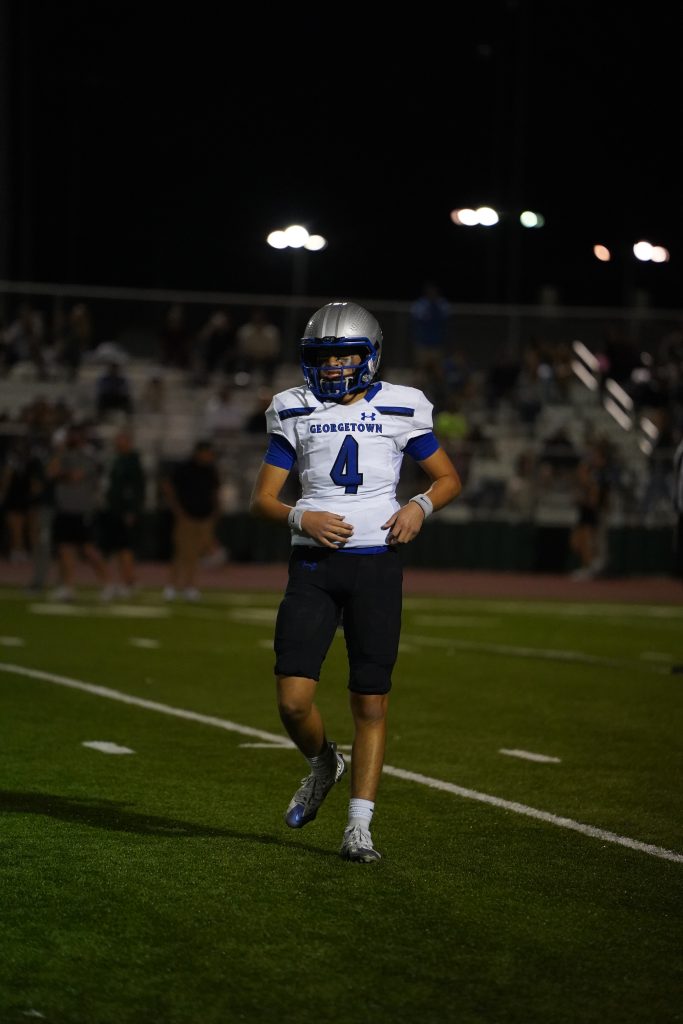
The through line in everything he says is other people. Ask a quarterback what he enjoys about the position and most will tell you about the ball. Torres answers in relationships. He likes leading the offense, building trust, setting the tone. He likes that every play starts with him — reading the defense, making the adjustment, having faith in his teammates and hoping they have it in him. Then he lists the group he gets closer to because of the job: receivers, running backs, offensive linemen, coaches. It reads like a kid who understands that the position is mostly a people problem with a football attached.
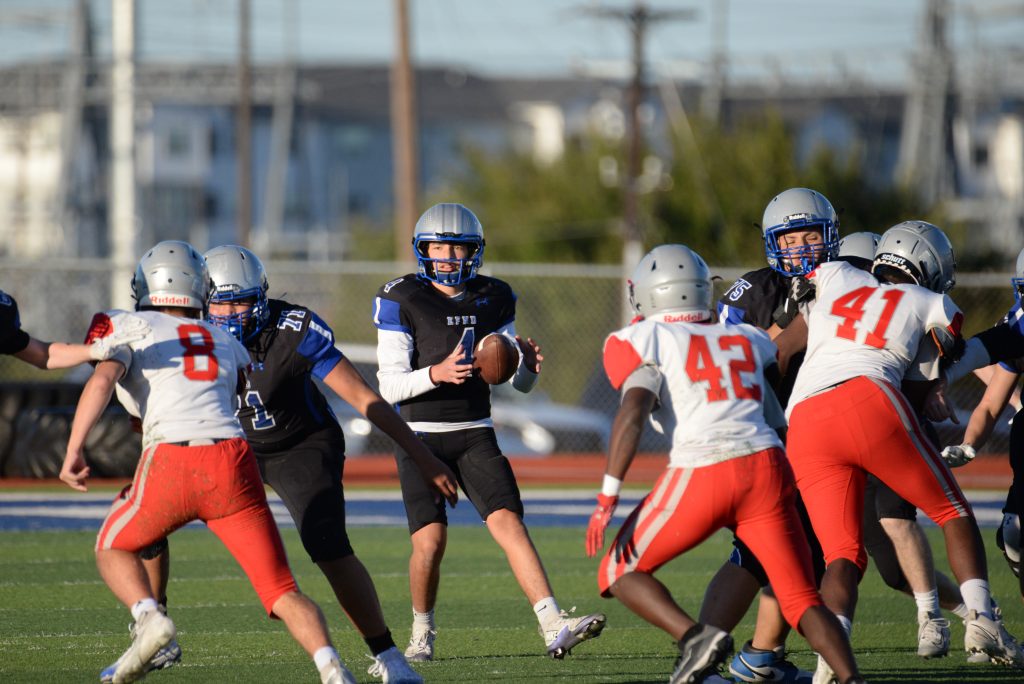
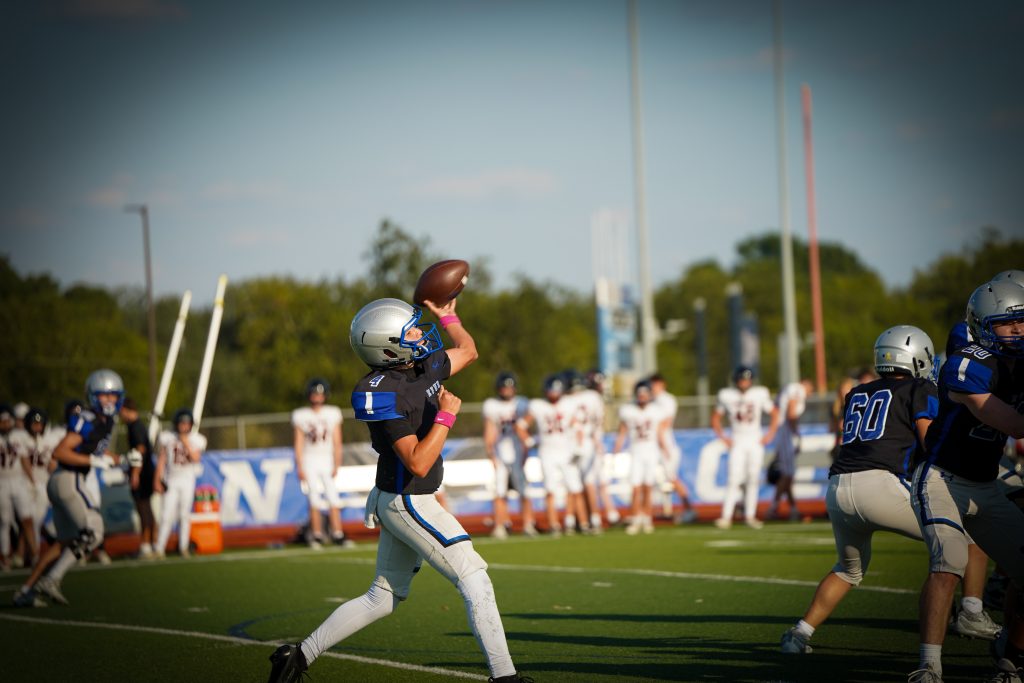
The football part has been tested. His favorite moment came in the opening week of his sophomore season, and it is a pocket play rather than a highlight run. Pressure came off the edge, he stepped up to escape it, and found another defensive lineman waiting in his face. He threw anyway — deep, complete, touchdown. That is a sequence that separates quarterbacks: the ability to keep your eyes downfield while the pocket collapses in two directions at once, and to deliver from a spot you did not plan to be standing in.
The harder battle has been the one nobody films. “The biggest challenge I have faced throughout my football journey is mental challenges,” he said. “There were moments where I would get inside my head when I messed up.” What he describes as the fix is not a trick but a habit — staying composed, trusting his preparation, and returning to the next snap regardless of what the last one did. “No matter the situation, always remember to keep calm and move on to the next play.”
Somebody helped him build that, and Torres names him without hesitation. Jarrell Flores, his offensive coordinator, is the coach he credits with his growth as a quarterback and as a leader. “More than anything, he believes in me even when I struggle,” he said, “and gives me confidence in myself and in the game of football.” That is a precise description of what a good coordinator actually provides to a young quarterback, and it is telling that Torres values the belief more than the play-calling.
The model he studies fits the pattern exactly. Dak Prescott — for his leadership, his toughness, the way he handles pressure, and the way he serves his community. A player who spends his summer coaching ten-year-olds naming the quarterback known for community work is not a coincidence.
The work behind it has been real. Torres trains with Coach Kevin Yeager, and he has competed at camps across Texas: Midwestern State, Howard Payne, Incarnate Word, Mary Hardin-Baylor, McMurry, and the three big ones — UT Austin, Texas A&M, and Baylor. His near-term list is all fundamentals: faster feet, more efficient reads, added physicality, sharper coverage recognition, and becoming a better leader. Further out, he wants to keep advancing his skills, grow personally and for his teammates, work relentlessly in the offseason, and, in his own words, expose himself more.
He is a junior now, which is the year that sentence starts to matter. He already knows how quickly one throw can change what a kid decides to do with the next ten years. He caught his from a television in his family’s living room. Somewhere in Georgetown, a nine-year-old just caught one from him.
What an Upgraded Membership Adds to a Junior Season
Among his long-term goals, Torres wrote one that has nothing to do with mechanics: he wants to expose himself more. That is the honest recognition that playing well and being known for playing well are two different projects. An upgraded QB Magazine membership is built for the second one.
The most tangible piece is the custom graphics. Our design team builds player assets around the athlete himself — his name, his class year, his school, his measurables — professional pieces made for posting and sharing. For a junior quarterback, these become what a coach screenshots and sends to someone else on staff, which is how most recruiting conversations quietly begin. They also give a season’s work a form that survives the scroll.
Then there is reach. Upgraded members have their content shared across QB Magazine’s platforms, and the value is in who is on the other end rather than the raw number. Juju’s own following is Georgetown — teammates, classmates, the families he has been coaching flag football for. Ours is coaches, trainers, camp directors, and recruiting staff who follow a quarterback publication deliberately. He has already stood in front of staffs at a dozen Texas programs in person. This is the same introduction, made again, from a direction they are already paying attention to.
The compounding is what makes it worth doing across a whole season rather than once. A single post is a good day. A feature, a run of graphics, and a profile updated through the fall become a record a staff can actually evaluate — and by the fourth or fifth time a name crosses a recruiter’s feed, it has stopped being unfamiliar. Junior year is when that repetition does the most work, because it lands while staffs are actively building their boards.
And it holds. Camp reps fade, film gets buried under newer film, seasons close. A published feature stays put. His profile lives at quarterbackmagazine.com/profile/juju-torres, and years from now the account of a kid who fell for the game watching Romo throw to Dez, then spent a summer teaching nine-year-olds to love it too, will still be there in his own words — with Coach Flores in it, right where he put him.
More info: quarterbackmagazine.com/memberships