
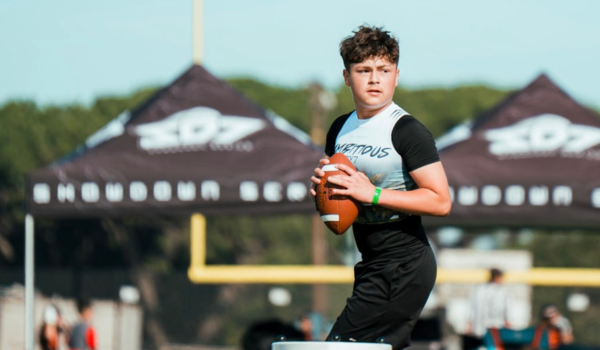
Logan Conrad | Quarterback | Class of 2031 | Redlands, California
Logan Conrad’s first flag football season ended 1–7. He led his team to a championship the following year.
That’s the whole arc in two sentences, and it’s the reason the Class of 2031 quarterback from Redlands, California is worth paying attention to. Plenty of young players have a good season. Fewer have a bad one first and can tell you exactly what they did about it.
“Went 1–7 my first season in flag football,” he said, asked about the biggest obstacle he’s faced. “Overcame it by working in the offseason to sharpen my game and accuracy. Came back the next season and led my team to a championship.”
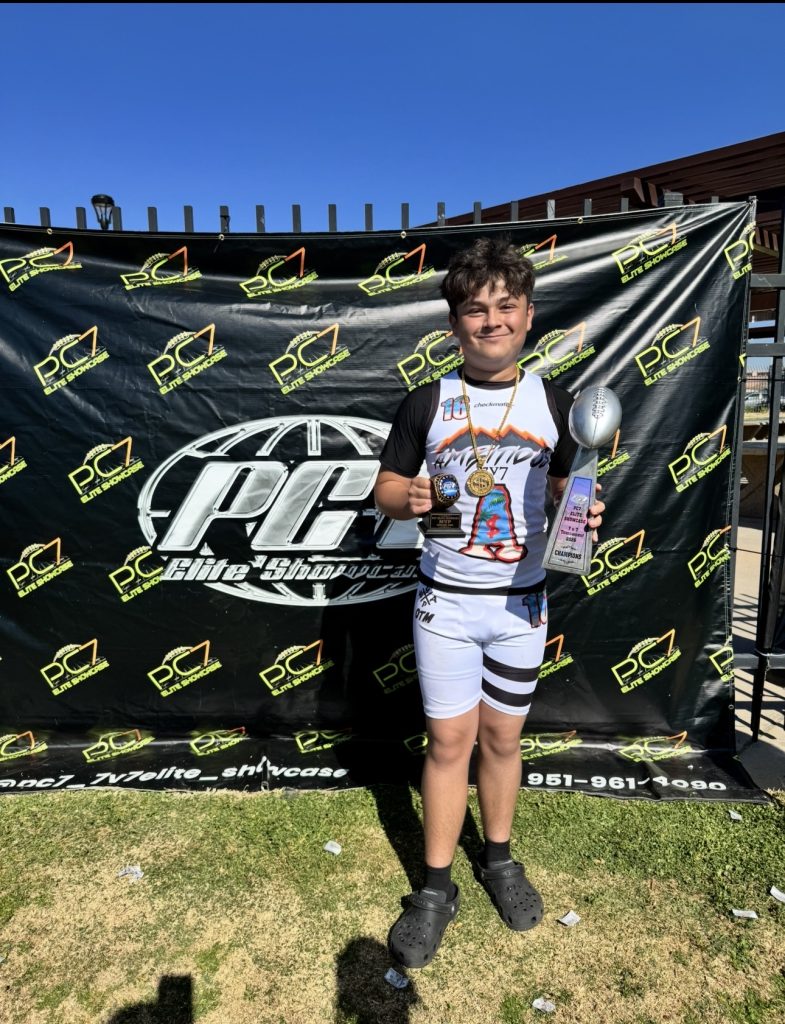
Nothing in that answer blames a teammate, a coach, or a schedule. It’s cause and effect: the season was bad, so he went and got better, and the next season was different. Most twelve- and thirteen-year-olds don’t yet connect those two things. Logan connected them at an age where the lesson will stick for the rest of his career, and the payoff arrived fast enough to prove the method works.
Football came to him at a Super Bowl party at his uncle’s house. Five years later, what keeps him at quarterback is not the throwing — it’s the job description. “I like playing my position because I get to be a leader and help my team succeed,” he said. He mentions making new friends and competing to win in the same breath. For a player his age, that combination matters: he likes winning and he likes the people he’s winning with, which is usually what keeps a kid in the sport past the first losing season.
He’s had one of those, so that’s not theoretical.
His definition of what it takes runs longer than most: good grades, dedication, hard work, being a good leader, and staying humble throughout the journey. The grades come first on his list, which is not where most seventh graders put them, and the humility comes last, which is where it belongs — a quality you maintain rather than achieve.
He trains with Tracy Cotton and has put himself in front of instruction outside his own team, attending the NextPlayLive camp and the Jaelen Phillips camp. That’s a player collecting reps and coaching from more than one source, which is how a quarterback’s development compounds.
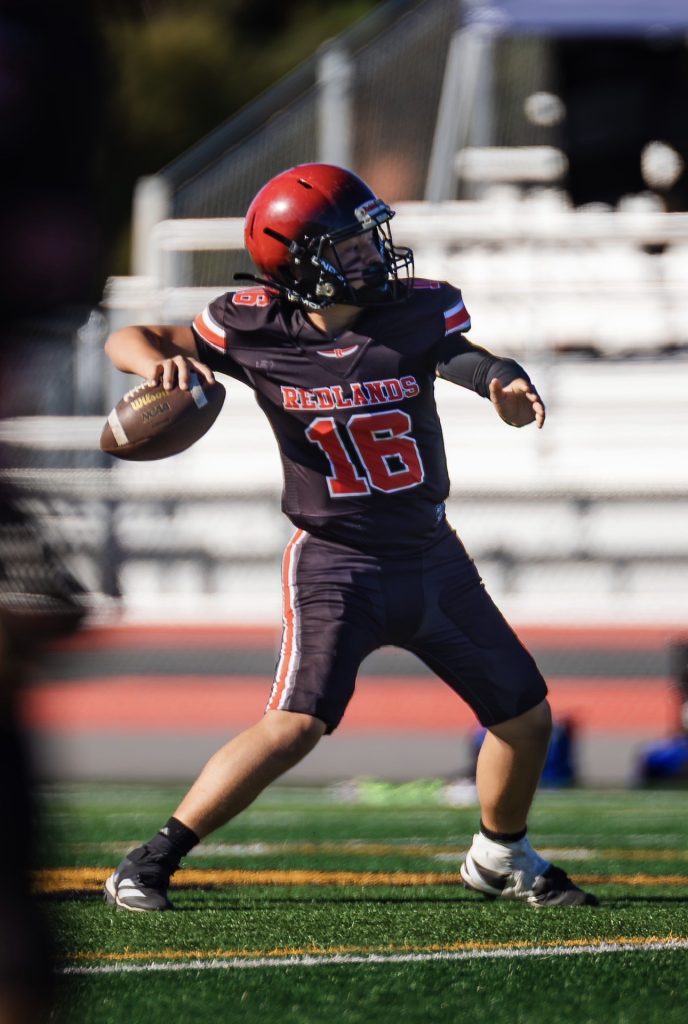
His favorite player is Tom Brady, and the reasons he gives are all internal. “I admire his motivation and qualities in never giving up,” he said. “I also admire his killer instinct.” Those two things pull in opposite directions — patience and ruthlessness — and holding both is roughly the job of playing quarterback.
The person he credits most is his dad, who coached his first flag football team and taught him the game. Logan’s description of him is specific in a way that suggests he’s thought about it. “He’s always been calm, patient, and supportive while I developed over the years.” Calm and patient is a useful thing to have standing next to you during a 1–7 season.
His goals are laid out in two tiers. Short term: develop, and be the best he can be to help his team succeed this season. Long term: keep developing toward becoming a starting quarterback in high school. The second one is a real target with real steps between here and there, and the first one is the step he’s on.
The two moments he’s proudest of tell the same story as everything else. The last touchdown throw of his first tackle season, and the game-winning throw in the flag football championship — the one that came after the 1–7 year.
Logan Conrad has five seasons between now and his senior year. He already knows what the bad ones are for.
What the Offseason Doesn’t Show
A note for Logan’s family
The most important stretch of Logan’s football life so far happened where nobody could see it. Between the 1–7 season and the championship was an offseason of work that produced the result everyone remembers — and if you weren’t in his family, all you saw was the trophy.
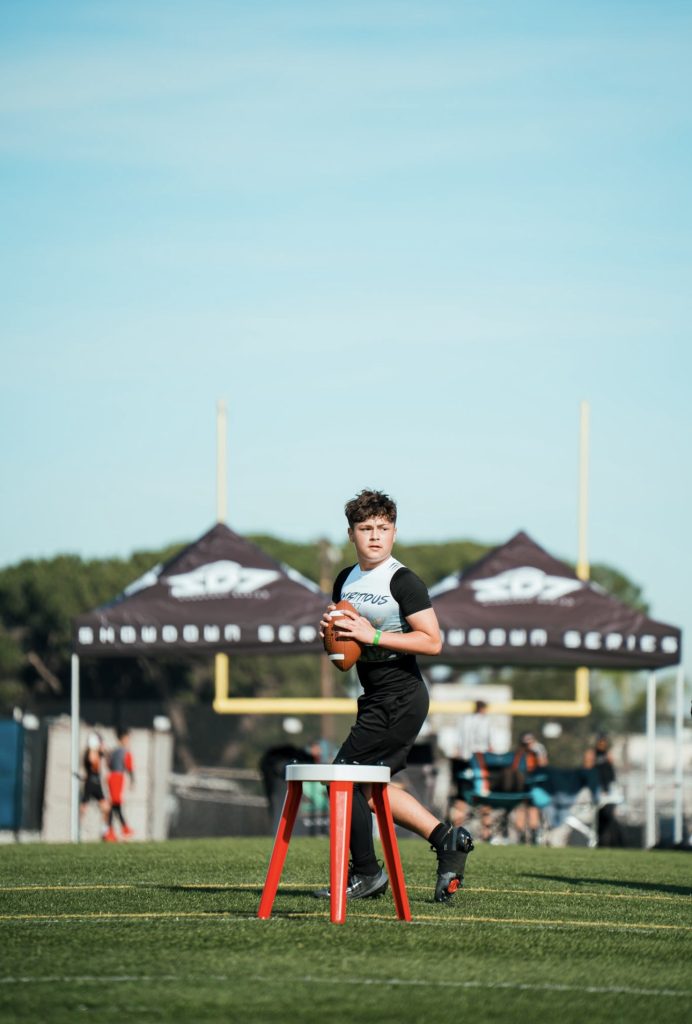
That’s the case for building a public record now rather than later. The wins get seen on their own. The climb doesn’t, unless someone documents it.
Custom graphics. Upgraded QB Magazine members get pieces designed by our team from their own photos and milestones — season openers, camp features, stat graphics, championship callouts. They’re built in the magazine’s format, which is what gives a young quarterback’s post the look of coverage rather than a family announcement. A trainer or camp director scrolling past reads that difference in about a second.
Distribution beyond his own followers. Logan’s account reaches Redlands — school, teammates, family. QB Magazine’s Instagram and X accounts reach quarterback trainers, camp staffs, coaches, and football families across the country. The content is the same; the room it lands in is not.
Five seasons of repetition. This is where an early start pays. Name familiarity isn’t built by one strong post, it’s built by appearing consistently until the name stops being unfamiliar. A quarterback who’s been showing up in QB Magazine coverage since middle school walks into high school camps already recognized by people he’s never met. For a player whose defining quality is steady improvement, a record that spans five seasons shows the whole slope, not just wherever he happens to be standing.
Something permanent. Every article, graphic, and post stays on his QB Magazine profile in order. Years from now it’s the complete account of how a kid who went 1–7 became whatever he becomes — the in-between part, not just the endpoints. His dad taught him the game and stayed calm through the worst of it. This is where the rest of it gets written down.
More info: quarterbackmagazine.com/memberships
One thing to check: this questionnaire came in back in February, when Logan was a seventh grader. He’d be in eighth now, so I kept grade references out of the body and used Class of 2031 throughout. He also didn’t list a school — only Redlands — so you may want to fill that in on the byline.