
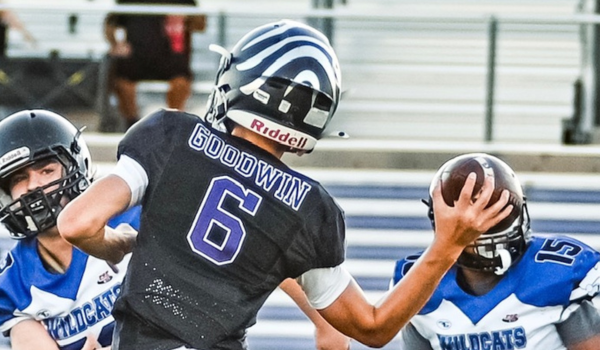
Mason Goodwin — Quarterback, Class of 2031 — ALA West Foothills, Goodyear, Arizona
For the last two years, the man teaching Mason Goodwin how to read a defense spent his professional career inside one.
Marquis Flowers played linebacker in the NFL. He is now Goodwin’s coach, and the education has come from a direction most young quarterbacks never get. “Marquis’s career in the NFL as a linebacker and his football IQ helped me to better read defenses and identify coverages,” Goodwin said. That is a specific kind of advantage. A quarterback coach teaches you what the picture should look like. A linebacker teaches you what the eleven people in that picture were actually told to do, what they are watching, and what a quarterback does that gives the whole thing away.
Goodwin does not describe him in schematic terms, though. “His leadership style builds trust, ownership, and resilience,” he said. “He demanded my best, but also made sure we had fun and still loved the game.” Then he adds the part that tells you the most: Flowers fostered a family atmosphere and went out of his way to help players on and off the field.
That is the environment a highly competitive twelve-year-old needs, because the competitiveness is both Goodwin’s best trait and the thing he has had to learn to manage.
“My biggest challenge has been the ability to maintain composure,” he said. “I’m highly competitive. My team relies on my leadership ability even when things and momentum aren’t going our way.” That is an honest diagnosis. The same fire that makes a player want the ball on every snap is the fire that turns a bad quarter into a worse one, and the quarterback position punishes it more than any other spot on the field, because everyone is watching the guy who touches the ball every play to decide how to feel.
His fix is a sentence he clearly did not invent on the spot. “I have learned to focus on the process, not the outcome.”
The football has been coming along. Goodwin started playing catch with his dad at three years old and has been playing competitively for eight years, which means he has been at this longer than most of his classmates have been in school. He trains with Mike Giovando, has been through six camps at Elev8QB, and has competed at two Quarterback Magazine combines in San Diego.
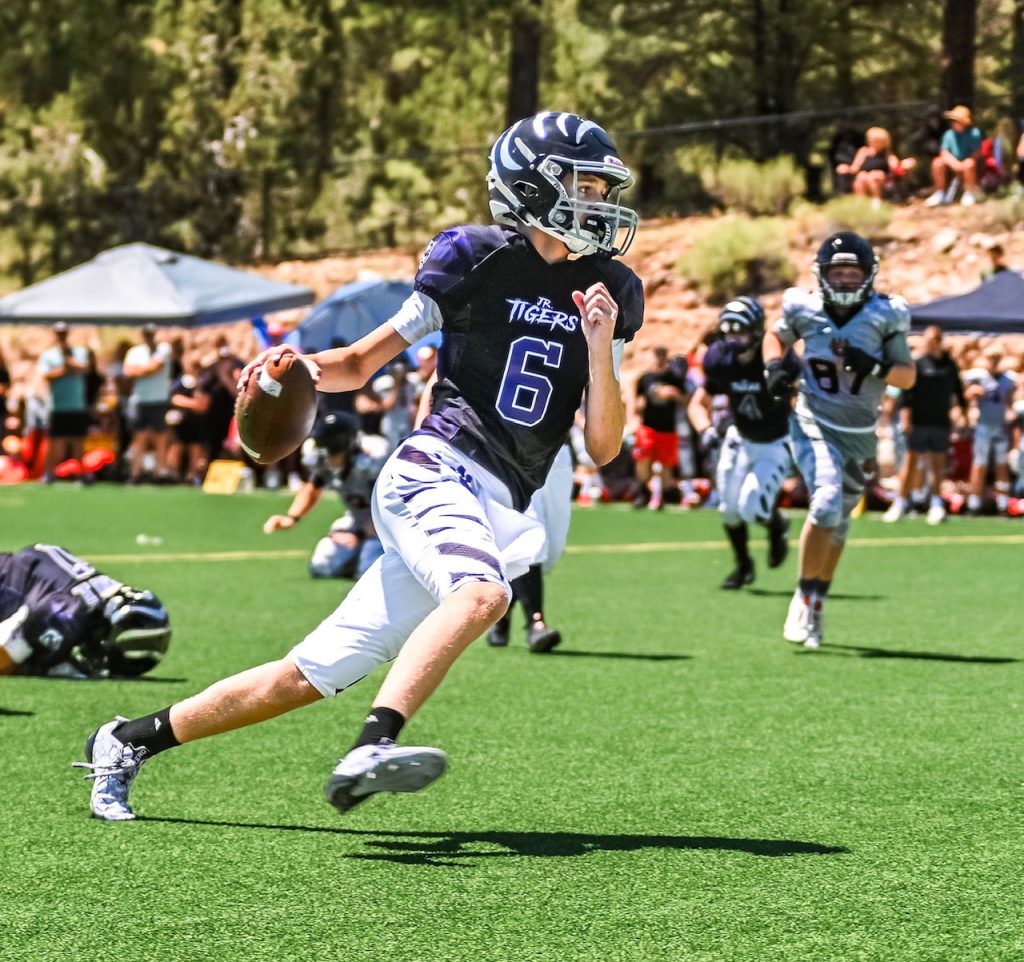
Ask him what he loves and the answer arrives at full volume. “I love being a playmaker,” he said. “I get the ball on every snap and ultimately have a direct impact on team success.” He describes himself as a dual threat who enjoys confusing defenses and can beat them on the ground or through the air, and he is direct about the energy he brings and what it does for the people around him. The quarterback he models is Lamar Jackson, for exactly the reason you would guess — the combination of efficient passing and rushing that leaves a defense without a good answer.
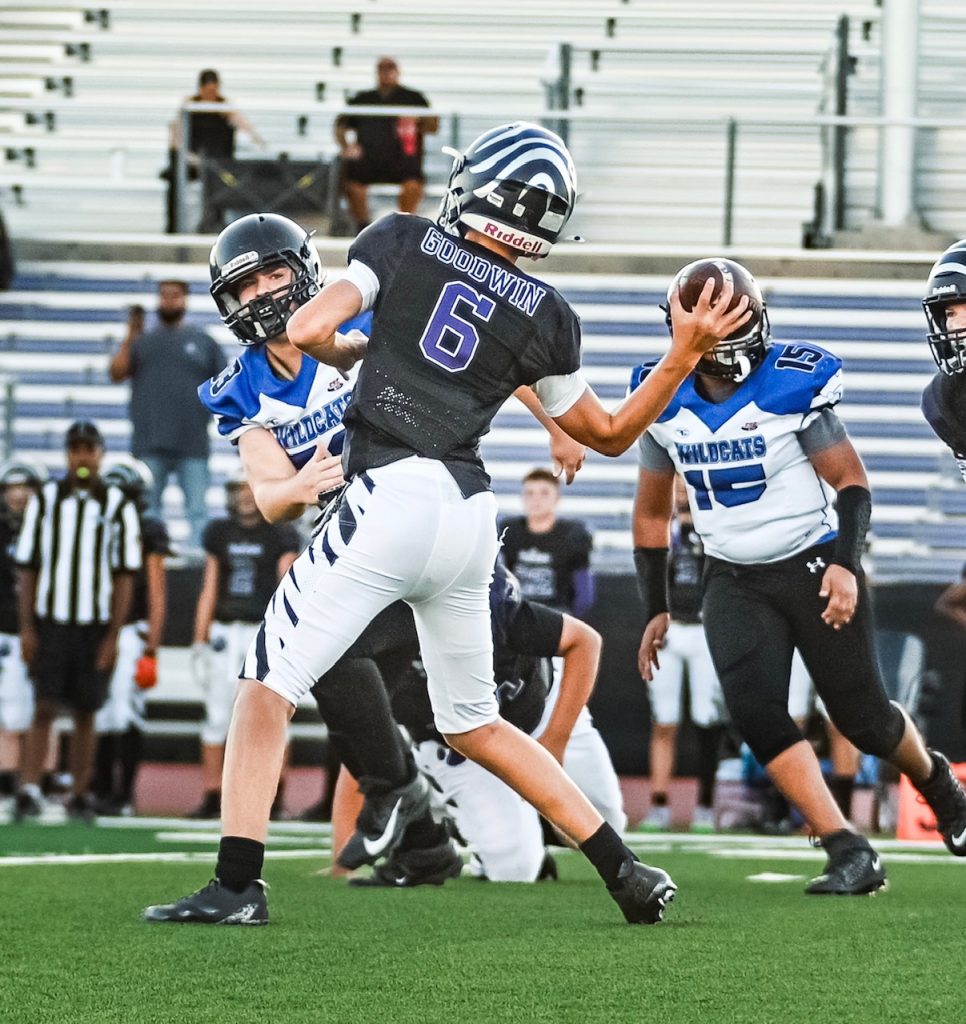
His own best moment fits that description, and it is the throwing half. In a game this past season he took the snap, rolled to his left, and delivered a 57-yard pass downfield. A young quarterback moving to his off side and still driving the ball that far is a real rep — moving left takes the easy throw away and asks the body to do something awkward at speed. It is on film, which he noted, because he is at the age where that starts to matter.
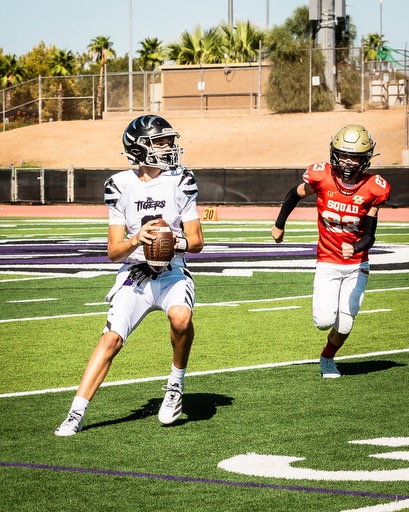
What he wants next is straightforward. He wants to keep preparing for the high school level, and he says plainly that he cannot wait to get there and take a team to a state championship.
For a player who has been throwing a football since he was three and who spent two years learning the game from someone who used to try to stop people like him, that is a reasonable thing to be impatient about.
For the Goodwin Family: What an Upgraded Membership Adds Before High School
Mason said the thing he has had to learn is to focus on the process instead of the outcome. That is a good way to think about this too. A QB Magazine membership upgrade is not an outcome — it does not win anybody a job or produce an offer. What it does is document the process while the process is happening, which turns out to be the part most families wish they had started sooner.
The most visible piece is the custom graphics. Our design team builds player assets around your athlete specifically — his name, his class year, his school, his numbers — professional pieces made for posting and sharing. A 57-yard throw on the roll deserves to live somewhere other than a team film account, and a clean graphic is what makes a play like that travel beyond the people who were already watching.
Then there is reach. Upgraded members have their content shared across QB Magazine’s platforms, where the audience is coaches, trainers, camp directors, and people who follow the quarterback position closely. Mason’s own following is the West Valley — teammates, families, the people who know him from Elev8. Ours reaches well past Goodyear, and for a player who is one year from walking into a high school program, being a name that people have already encountered is simply a smoother way to arrive.
Across time it accumulates. A feature, a run of graphics, and a profile that keeps growing season to season become a visible record of development, which is the most persuasive thing a young quarterback can have. Class of 2031 means there is a great deal of runway and no reason at all to rush. The only thing that cannot be recovered later is the early part, because nobody can go back and document a season that has already ended.
And it stays. Teams change, film gets buried, middle school blurs. A published feature does not move. His profile lives at quarterbackmagazine.com/profile/mason-goodwin-87, and years from now the account of a kid who started throwing with his dad at three, learned to read coverages from an NFL linebacker, and figured out at twelve that the process matters more than the scoreboard will still be there in his own words — with Coach Flowers in it, right where he put him.
More info: quarterbackmagazine.com/memberships