
Noah Carlson — Quarterback, Class of 2033 — Logan-Rogersville, Rogersville, Missouri
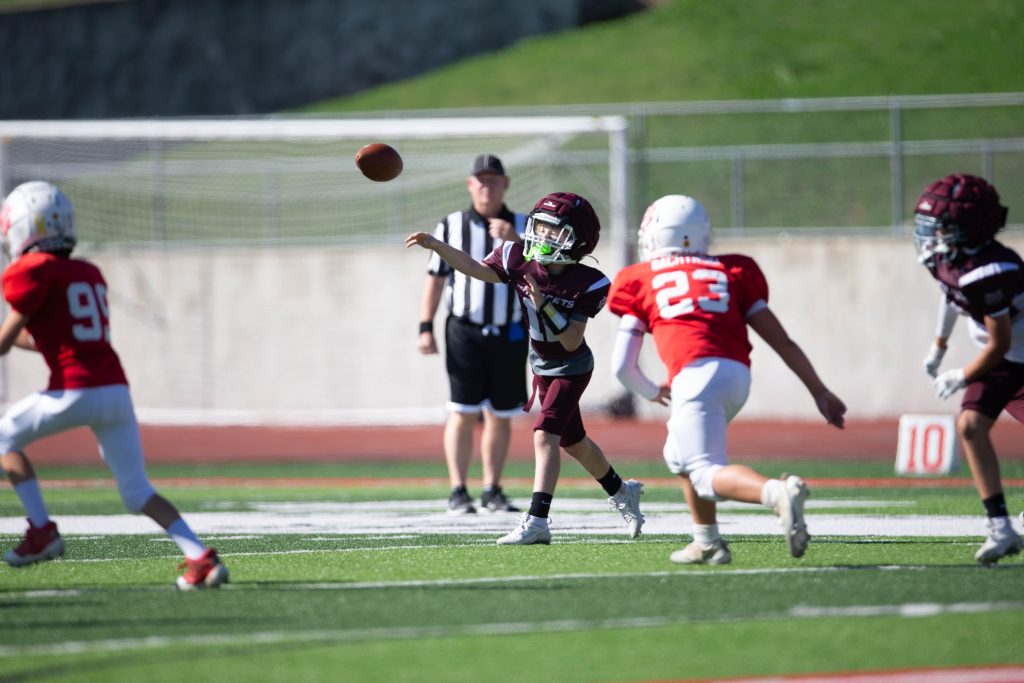
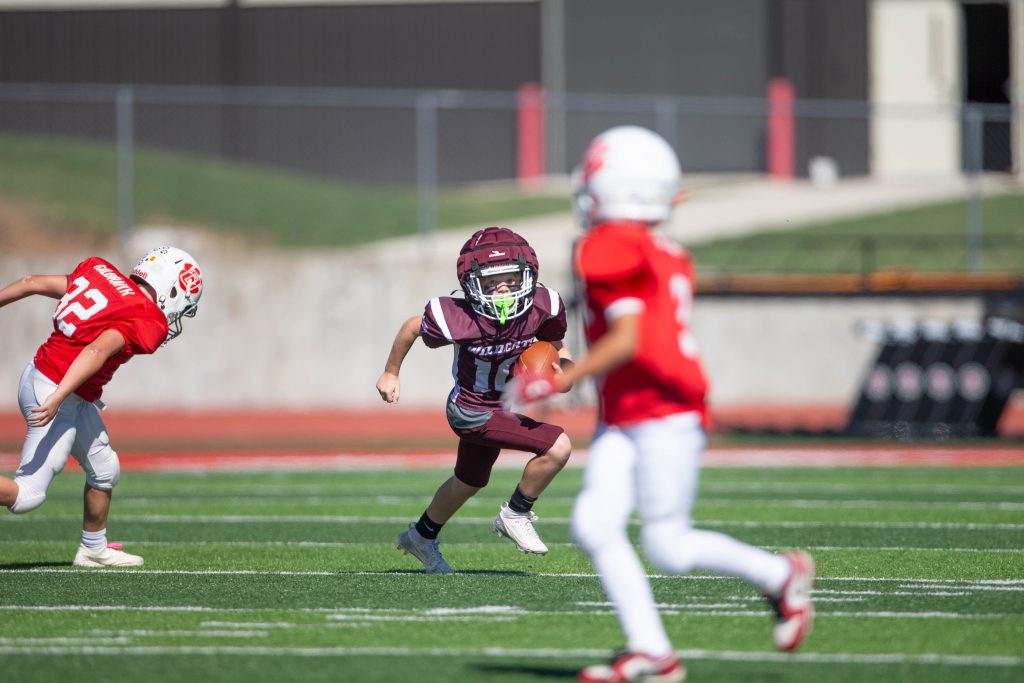
Fourth quarter, close game, against a rival program two classifications bigger. Noah Carlson found a crease up the middle and did not get caught for eighty-one yards. It put his team ahead. It won the game.
Ask him about the hardest thing he has dealt with in football and he will tell you, in so many words, that the eighty-one-yard run is not the point.
“The biggest challenge I’ve faced is learning to love the process,” he said. “It’s not always the highlights. It’s more about the journey that created those highlights. It’s been hard to remember that long practices and training sessions are a necessity for my success.”
That is a sophisticated thing for a sixth grader to have worked out, and it is worth pausing on why it counts as a challenge at all. Young players are handed the highlight version of the sport constantly — the run, the throw, the celebration. What almost nobody shows them is the Tuesday. Carlson has figured out that the Tuesday is where the Friday gets made, and that knowing it is different from enjoying it. He is honest that he is still working on the enjoying part.
He came to the position for a reason that sounds a lot like the same instinct. “I love playing quarterback because it’s extremely challenging,” he said. “It’s the toughest position on the field and I love a challenge.” Four years in, having grown up with a father who played college football, he could have picked anywhere on the field. He picked the one that is hardest to be good at.
His other favorite memory suggests he is not only playing that position, either. It was an interception he returned for a touchdown, again against a school two classes larger. A quarterback who also has a pick-six on his résumé is telling you something about how a small-school team uses its best athlete, and about a kid who does not come off the field.
The quarterback he studies is Caleb Williams, and the admiration is specific to mechanics rather than image. What he likes is the athleticism that lets Williams move around the pocket and still throw with power and accuracy from any platform he ends up on. That is the modern version of the job, and it is a reasonable thing for a player who just outran a defense for eighty-one yards to be building toward.
When he lists what the position actually requires, though, none of it is physical. A strong leader. Someone intelligent. Someone with great character. Someone who can be very coachable. Four qualities, zero of them measurable at a combine — which lines up neatly with a player whose stated challenge is valuing the invisible part of the work.
The person who taught him that is the same person who has been standing on the sideline the whole time. “My dad,” Carlson said, when asked who has had the biggest impact on his career. “He has been my coach for the last four years and has supported me through everything. He taught me how to work hard and chase my dreams. He also helped me pursue my development as a quarterback in finding coaches and mentors to help me.” That last sentence is the one worth noticing. A father who coaches his own son and then actively goes looking for other people to teach him is a father thinking about the long version of this.
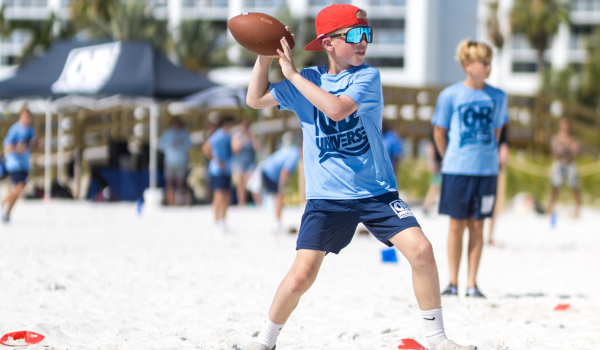
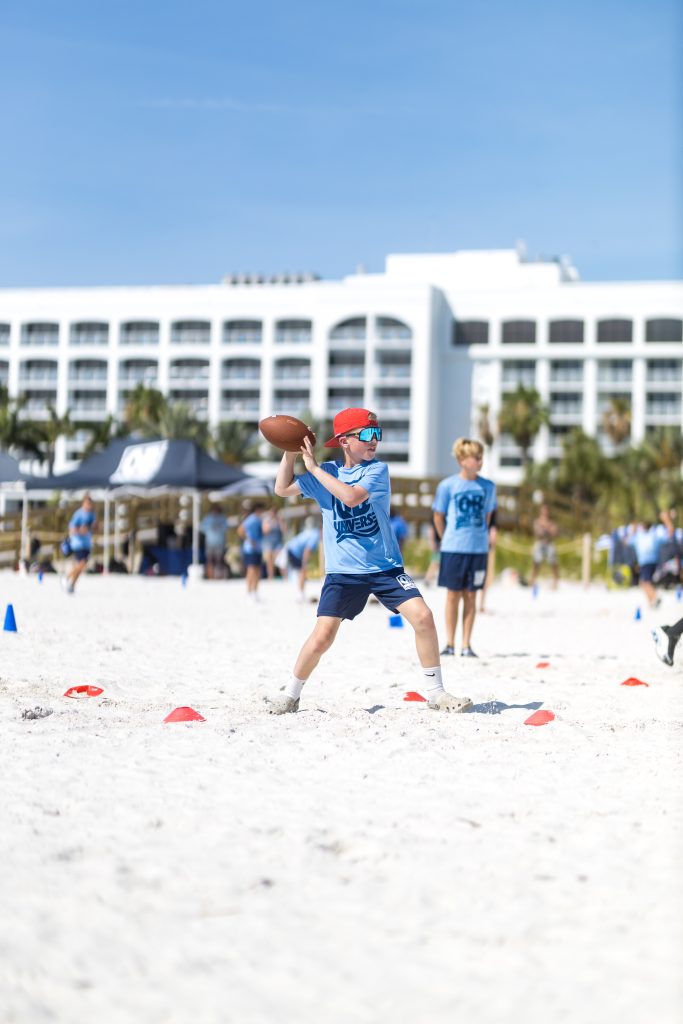
Some of that search has already paid off. Carlson trains with Cole Feuerbacher and has been to Quarterback Universe in Tampa, which is a real trip to make for a sixth grader from a town of four thousand people in southwest Missouri.
His goals are split the way they should be at his age. Near term, he wants to keep developing and become one of the best quarterbacks in Missouri. Further out, he is aiming at a Division I scholarship from a top program — a long way off for the Class of 2033, and he knows it. That is rather the point. He has already decided that the distance between here and there is made out of practices nobody will ever see.
For the Carlsons: What Upgrading Puts in Place
Noah said the part he is still learning to love is the journey — the long practices and training sessions that never make it into a highlight. A QB Magazine membership upgrade is, in a straightforward way, about giving that journey somewhere to be recorded.
The first piece is the custom graphics. Our design team builds player assets around your athlete specifically — his name, his class year, his school, his numbers — professional pieces made for posting and sharing. An 81-yard game-winner against a program two classes bigger deserves better than a shaky sideline clip in a group text. A clean graphic turns a night like that into something the family keeps and the football world can actually see.
The second is reach. Upgraded members have their content shared across QB Magazine’s platforms, where the audience is coaches, trainers, camp directors, and people who follow a quarterback publication on purpose. Noah’s own following is Rogersville — family, teammates, neighbors who were in the stands. Ours reaches well beyond southwest Missouri, and when a goal includes the words “one of the best quarterbacks in Missouri,” being known outside your own county is simply part of it.
What makes it work over time is accumulation. One graphic is a nice week. A feature, a run of graphics, and a profile that keeps growing season after season become a record of development — and development is the thing that reads best on a young player. The fun part of Class of 2033 is that there is no hurry whatsoever. There is just a great deal of runway, and a player who has already decided to spend it working.
And it lasts. Seasons end, film gets replaced, memories blur. A published feature does not go anywhere. Ten years from now, the account of a sixth grader who broke an 81-yard run to win a game and then said the run was not the important part will still be there in his own words, with his dad in it, right where he put him.
More info: quarterbackmagazine.com/memberships