
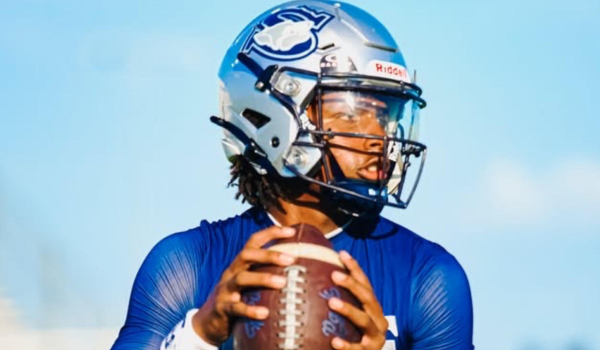
Reshard Jevon Hicks Jr. — Quarterback — [class year, school, and city to be added]
Every quarterback’s story has a moment where somebody else decides something about him. For Reshard Hicks Jr., it came in the form of a depth chart.
“The biggest challenge I faced was becoming a backup quarterback,” he said.
There is no softer way to say that, and he does not try to find one. Losing the job is the specific humiliation of the position — it happens publicly, in front of everyone who watched you take the first-team reps last week, and there is nowhere on the sideline to hide from it. Some players never come back from it. They decide the coaches are wrong, or that the sport is, and the decision quietly ends them.
Hicks went the other way, and his description of how is one short sentence with no self-pity in it. What he did to get back up there, he said, was take everything seriously.
That is the entire answer. Not a training montage, not a transfer, not a complaint about the guy ahead of him. Everything. Every rep, every meeting, every rep in a drill that does not feel like it matters — treated as though it counted, because it turned out that it did.
It fits what he believes the position actually requires. Asked what makes a great quarterback, Hicks does not mention arm strength or size. “You have to know how to do the small things right,” he said, “and secondly it’s most definitely field IQ.” The small things and the thinking. That is a list written by somebody who lost a job over details and went looking for them afterward.
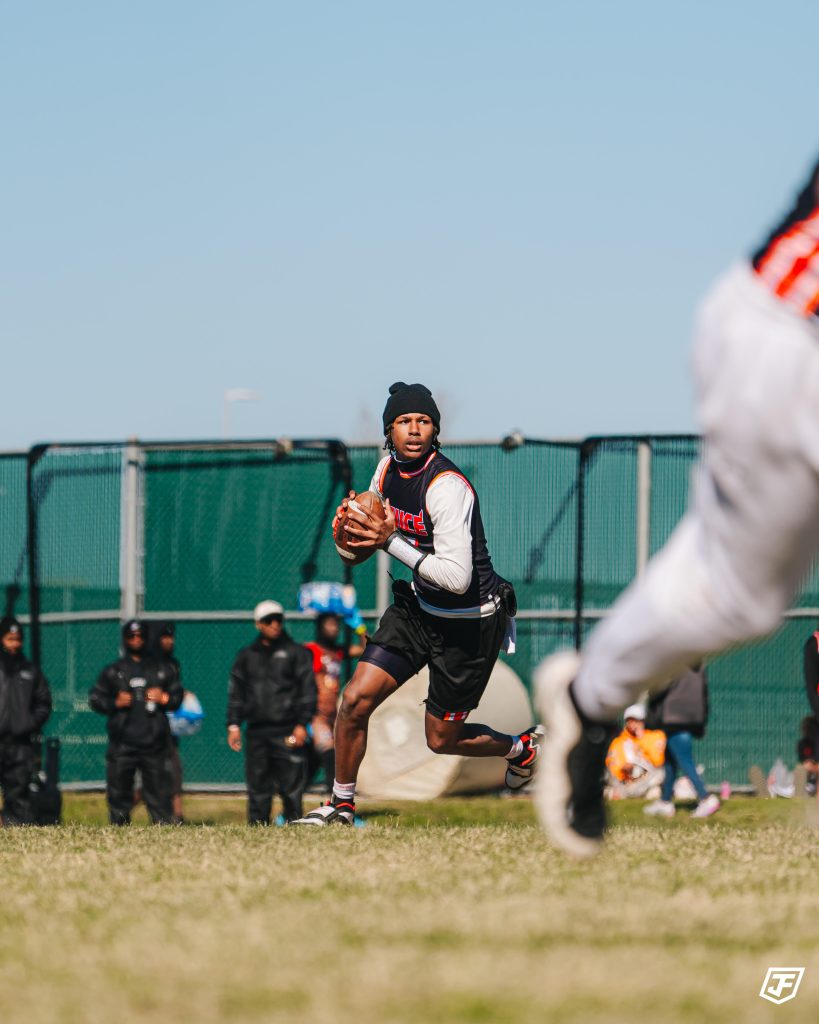
He has been playing since he was six, brought into the game by a father who played in college and has been pushing him ever since. When asked who has had the biggest impact on his career, he names his dad for exactly that reason — the pushing, since he was young, without pause.
What he likes about the position now is what he liked about it then. “I enjoy being a leader of the team while controlling the offense,” he said. Both halves of that matter. Leading is the people part. Controlling the offense is the technical part. He wants the whole job.
The quarterback he watches is Drake Maye, and the appeal is the modern hybrid — a passer who can beat you down the field but does not stand still and wait to be hit. That is a reasonable model for a young quarterback building toward a complete game rather than a specialized one.
The work behind it has been extensive. Asked whether he has attended camps, Hicks answered, “Yes, too many” — which is a good problem. The list runs through FBU, You Are Athlete, Under Armour, QBR, and Quarterback University, plus college camps. He trains with Shaun Rutherford.
His goals are stated plainly and come in a pair. He wants to take his high school team to a state game, and he wants his first offer. The order is worth noting: the team thing first, the personal thing second, from a player who already knows what it feels like to have the personal thing taken away.
The memory he picks out of ten years in the sport is not from any of those camps. It is his first touchdown pass. For a kid who has since been demoted and climbed back, there is something fitting about the play he holds onto being the first time it all worked.
What an Upgraded Membership Adds on the Way to a First Offer
Reshard named two goals, and one of them is a first offer. Offers do not arrive because a player is good. They arrive because a coach knows a player is good, and those are separate problems requiring separate work. An upgraded QB Magazine membership exists to address the second one.
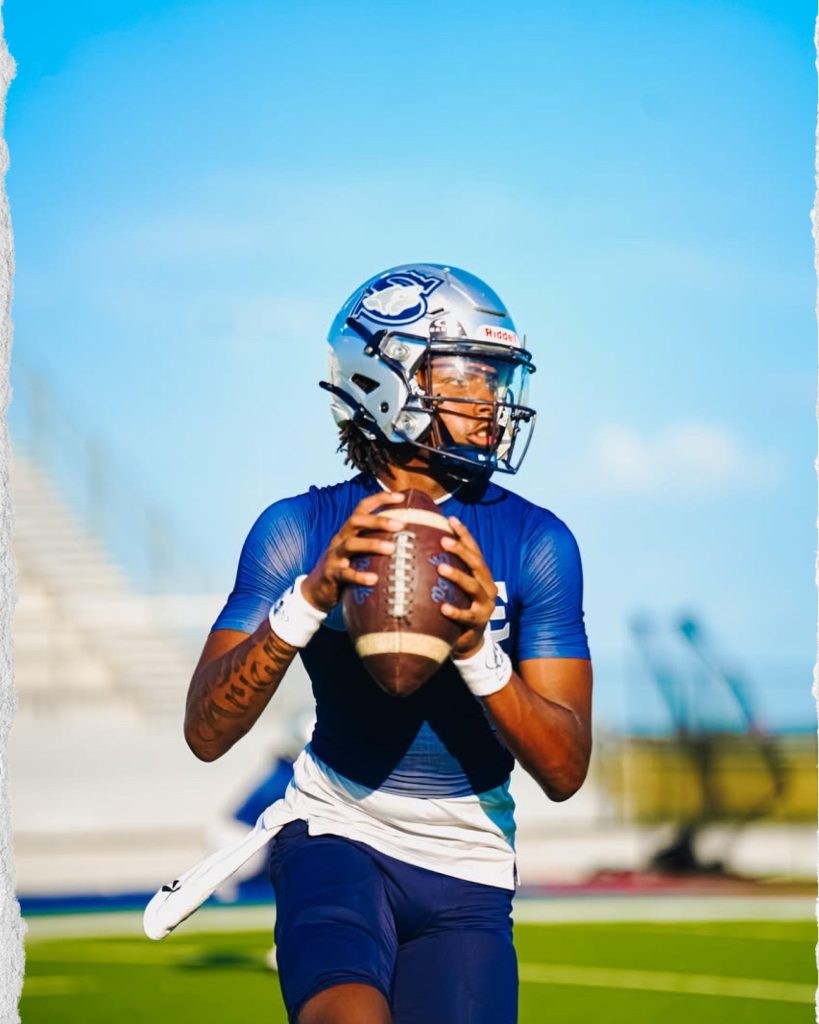
The first piece is the custom graphics. Our design team builds player assets around the athlete himself — his name, his class year, his school, his measurables — professional pieces made to be posted and shared. For a quarterback with a camp résumé as long as his, a clean graphic is what turns a day of reps into something that still exists next month. It is also the format coaches screenshot and forward, which is where most recruiting conversations quietly begin.
Then there is reach. Upgraded members have their content shared across QB Magazine’s platforms, and the value is in who is watching rather than how many. Reshard’s own following is people who already know his name. Ours is coaches, trainers, camp directors, and recruiting staff who follow a quarterback publication on purpose. He has already been in front of a lot of those people at camps. This is the same introduction repeated from a direction they check regularly.
The compounding is what makes it worth doing across a season instead of once. A single post is a good day. A feature, a run of graphics, and a profile updated through the fall add up to a record — so when his name comes up in a staff room, it is the fourth or fifth time rather than the first. Familiarity is not the same as an offer, but it is almost always what comes before one.
And it lasts. Camp reps fade, film gets replaced, seasons close. A published feature does not move. Years from now, the account of a quarterback who lost his job, decided the answer was to take everything seriously, and played his way back will still be there in his own words — with his dad in it, right where he put him.
More info: quarterbackmagazine.com/memberships