
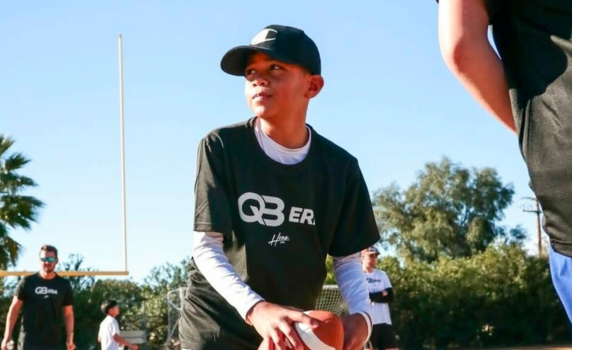
QB Magazine Athlete Feature
Uriah Edwards’ flag team had been together six months. Six months is not enough time to build much of anything — not timing, not trust, not the shorthand that lets five players operate like one.
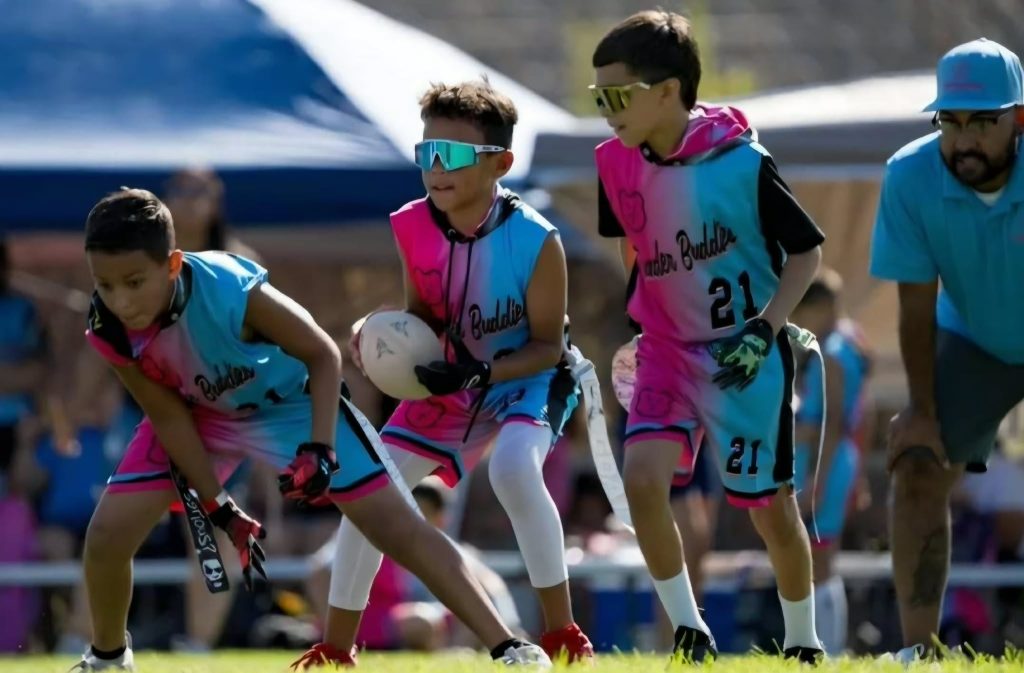
They took their lumps. They made changes. Then in November, at the Gametime Sports League “Turkey Palooza” Turkeybowl, they ran into the one-seed with a title on the line.
To win it, they had to beat that team twice.
“We had to double dip the number one seed to win it all,” the Class of 2032 quarterback said.
For anyone unfamiliar with the format: in a double-elimination bracket, an undefeated top seed has to lose twice to be eliminated. Edwards’ team beat them, then had to turn around and do it again immediately, against a group that now knew exactly what was coming. Six months of existing, and the first championship arrived the hardest available way.
The Thing He Had to Unlearn
The reason that run is more interesting than the score is what Edwards says he was working on at the time.
“My biggest challenge was trying not to do too much and trust my teammates more,” the El Paso sixth grader said.
That is the single most common failure mode for talented young quarterbacks. When you are the best player, every problem looks like something you should personally solve — and every time you solve it, the habit gets reinforced. It works right up until it does not.
Edwards fixed it by rethinking what leadership actually means.
“I was able to overcome this challenge by realizing that I don’t have to do everything, even as a leader, for us to be successful.”
Even as a leader. He is not describing a retreat. He is describing an upgrade — from the guy who carries the team to the guy who uses it. A five-man flag team with six months of chemistry does not double-dip a top seed if its quarterback is playing hero ball.
Six Years, One Coach
Edwards has been playing for six years, and the origin is a familiar one in the best way.
“I’ve been watching football with my dad since I was very little,” he said. “I wanted to play like he did.”
His dad has been his coach and trainer since he was six, and when asked to name the person who has had the biggest impact on his development, Edwards does not elaborate or hedge. It is his dad. That is the whole answer.
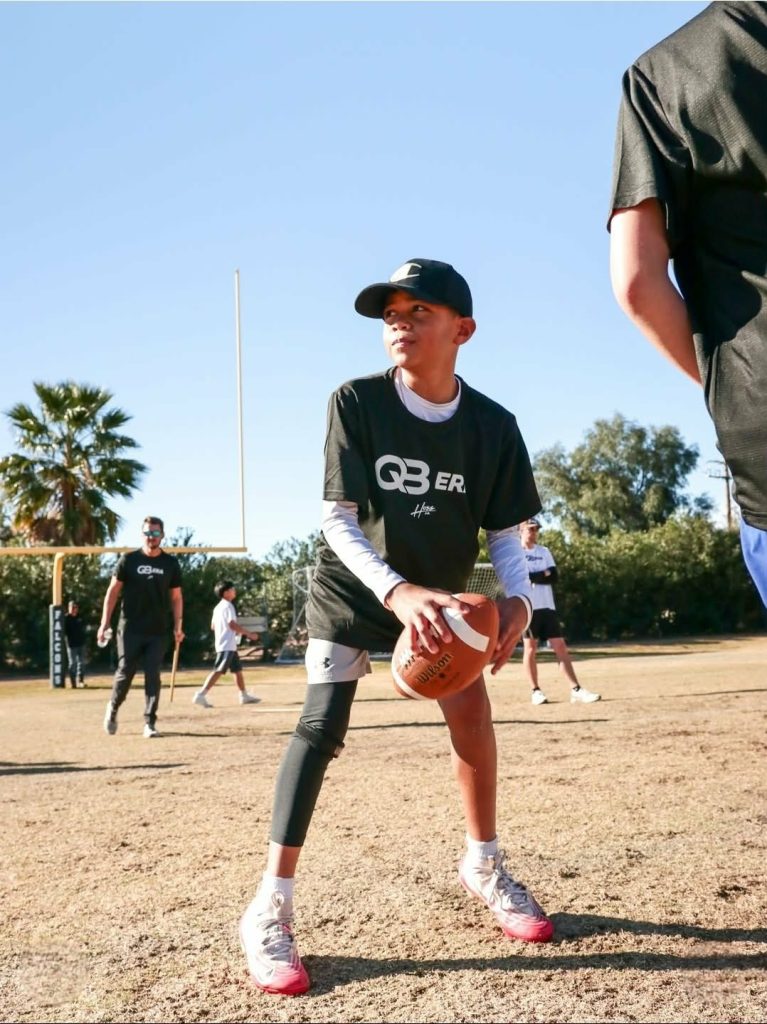
He has taken that foundation on the road, working camps at QB Era and ELEV8 in Arizona and the Veliz camp back home in El Paso — the kind of exposure that puts a young quarterback in front of coaching that has no history with him and no reason to go easy.
Arm, Mind, Feet
His definition of the position is compact and correctly ordered.
“As a quarterback, having a strong arm, a strong mind, and being agile,” Edwards said. “You have to be able to make the right decisions quickly and be able to execute plays effectively.”
The mind sits in the middle of the list, and the sentence that follows is entirely about decision-making. In five-man flag, where the ball comes out fast and there is nowhere to hide, that is not an abstract virtue. It is the job.
His favorite quarterback fits the same template — with an addition worth noting.
“Dak Prescott — he has a strong arm and is mobile,” Edwards said. “He also does a lot of things for the community outside of football.”
That last clause is not something most twelve-year-olds think to include when picking a favorite player. He listed the community work alongside the arm talent, as if they belong in the same evaluation. They probably should.
What’s Next
His goals are split by timeline, and the near-term one is not modest.
Six months: win the Youth Flag Football World Championship and Nationals. Twelve months: keep training and keep getting better at the position.
Big swing followed by the unglamorous work that makes big swings possible. He is also a multi-sport athlete, competing in wrestling and track — two sports that build exactly what a flag quarterback needs, leverage and closing speed, from completely different directions.
Edwards says he loves the competition of the sport, and that he loves quarterback because he is a leader. What makes that second part credible is that he already redefined what he meant by it once, and won a championship on the other side of the change.
A Note on Memberships
Uriah already has a story worth keeping — the Turkeybowl run, the camps in Arizona and El Paso, six years of work with his dad.
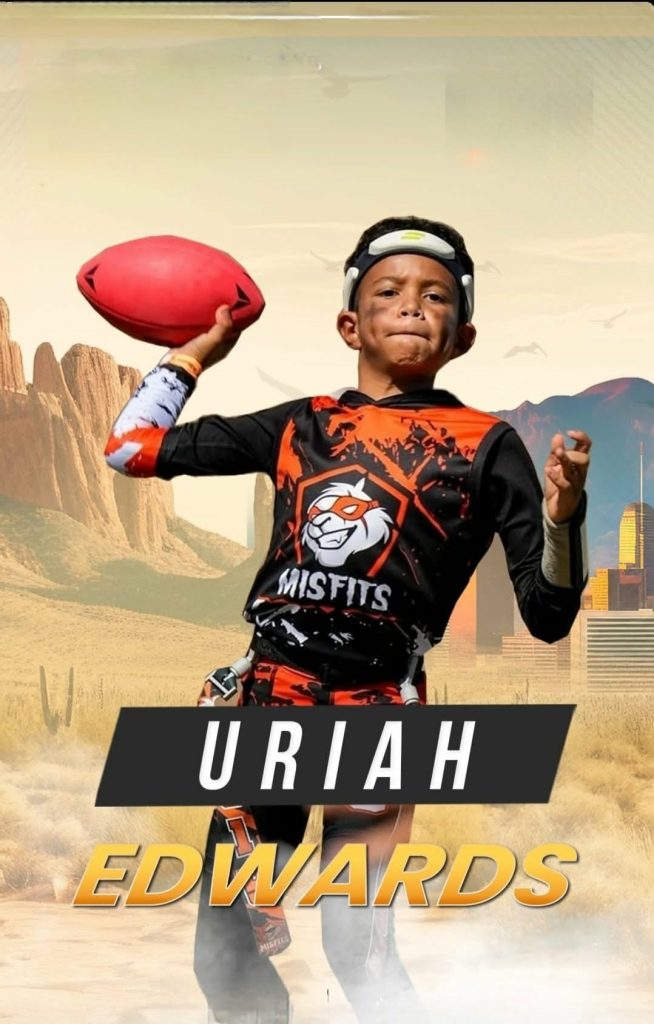
Heading into the fall, an upgraded QB Magazine membership adds a professionally designed athlete graphic, feature placement across QB Magazine’s channels, and a profile that grows season by season as he does. With Worlds and Nationals ahead of him, having a place where each result gets recorded as it happens means the run he is on stays documented rather than remembered in pieces later.
Explore membership options at quarterbackmagazine.com/memberships.
Uriah’s QB Magazine profile: quarterbackmagazine.com/profile/uriah-edwards · Instagram: @Uriah.edwards3